Mayo Clinic careers include opportunities in nursing, physician services, healthcare administration, research, technology, and support roles across hospitals, clinics, and community locations. Whether you’re looking for entry-level healthcare work, remote positions, or advanced clinical careers, Mayo Clinic and Mayo Clinic Health System offer jobs in a wide range of specialties and work environments.
From major campuses in Rochester, Jacksonville, Phoenix, and Scottsdale to regional Health System clinics in Minnesota, Iowa, and Wisconsin, the experience can vary a lot depending on the role and location.
If you’re planning to apply, it helps to understand the career categories, hiring process, applicant login system, and workplace expectations before you start.
What Types of Roles Are Available
You’ll see jobs for licensed clinicians, early-career professionals, and folks interested in business or operational support. Many openings revolve around patient-first care, clinical expertise, and chances for ongoing professional growth.
Physician Opportunities
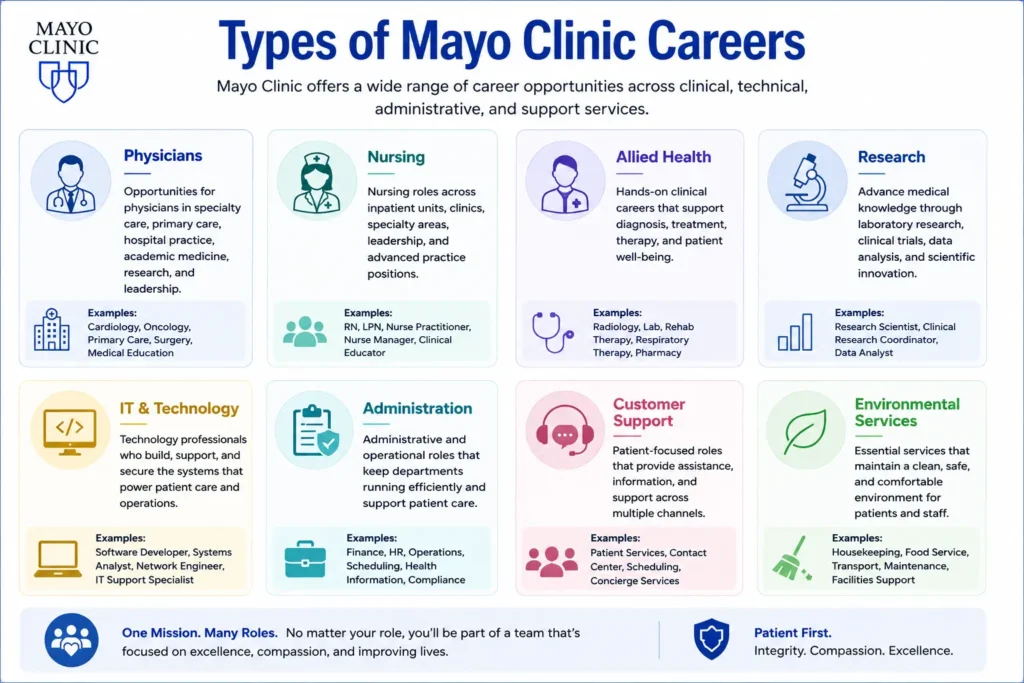
If you’re a physician, you can look for roles in specialty care, primary care, hospital-based practice, or academic medicine. Mayo Clinic’s reputation for complex care means many physician jobs involve collaboration across specialties, with a real emphasis on clinical skill.
You might also find teaching, research, or leadership opportunities, depending on the department and location. In the Health System, physician roles often include serving regional hospitals and community clinics, but you’re still working within a larger, physician-led model.
Nursing and Allied Health Careers
Nursing jobs cover staff nurse, nurse practitioner, nurse manager, procedural nursing, and specialty unit positions. Allied health careers include imaging, lab, rehab, respiratory therapy, pharmacy, surgical services, and other hands-on clinical support roles.
If you care about growth, you’re in luck. Mayo puts a lot of weight on structured training, continuing education, and letting people move into specialty or leadership tracks.
Non-Clinical and Administrative Positions
Not every job is at the bedside or in a clinic. There are roles in finance, HR, scheduling, health information, medical coding, IT, operations, marketing, research administration, and customer service.
Support services keep things moving too. Depending on the site, you might see food service, environmental services, transportation, and other jobs that help care settings run smoothly.
Where You Can Work and What the Culture Is Like
Your work setting shapes your daily pace, team setup, and patient population. Mayo Clinic has large destination campuses and a broad Health System network. The culture really leans into teamwork, professional development, and physician-led care.
Major Mayo Clinic Campuses and Communities
Most job seekers check out the main Mayo Clinic campuses first: Rochester, Minnesota; Jacksonville, Florida; and Phoenix and Scottsdale, Arizona. These sites usually offer a ton of specialty roles, research jobs, and exposure to complex cases that need deep clinical knowledge.
If you want an academic medical environment, these campuses give you access to a wide range of physicians, specialists, and support teams. There’s also strong potential for internal mobility and professional growth.
Mayo Clinic Health System Locations
The Health System serves communities in northern Iowa, southern Minnesota, and western Wisconsin. You’ll find regional medical centers, hospitals, specialty clinics, and smaller primary care clinics.
If you want to work closer to patients in a community setting, this network might be a better fit. You’re still part of the Mayo system, but your day-to-day might feel more local and broad-based than at a big referral campus.
Team-Based and Physician-Led Work Environment
The culture gets described as team-based and physician-led. Physicians work closely with nurses, allied health professionals, and admin teams—not off on their own.
You’ll notice a strong patient-first focus. In real life, that means shared decision-making, high standards for professionalism, and support systems for development across many job types.
How to Apply and What to Expect
The hiring process runs through an online job portal and applicant account tools. You’ll also see standard employment checks and policies linked to EEO, E-Verify, and federal labor notices like the FMLA poster and Employee Polygraph Protection Act info.
Searching Open Jobs and Creating Alerts
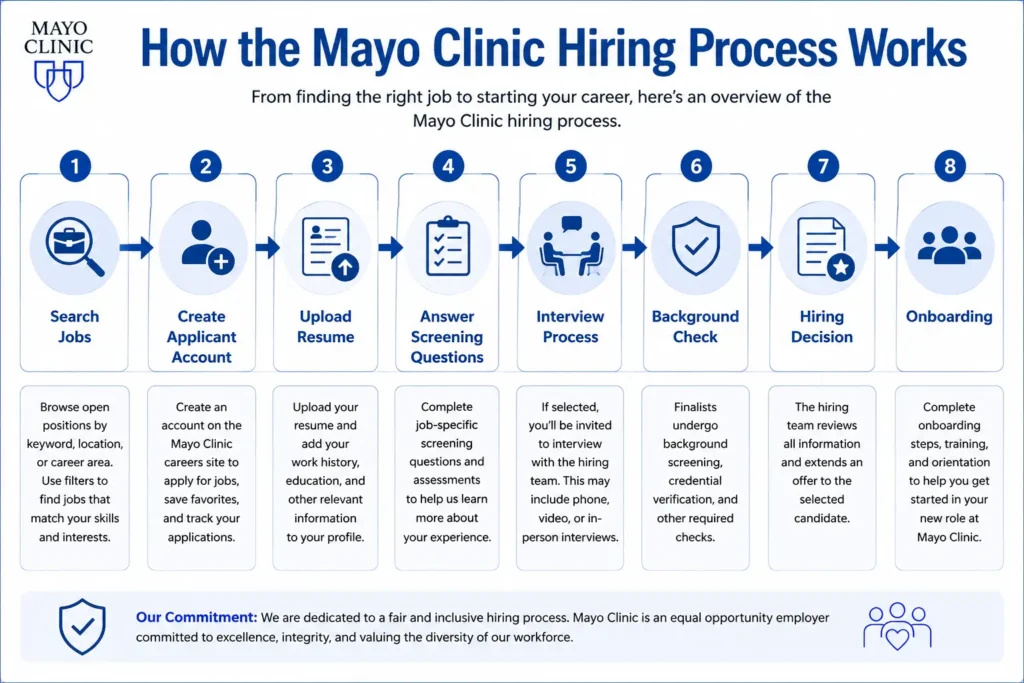
Start by searching open jobs using keywords, location, or career area. Narrow things down by job family—physicians, nursing, admin support, or Health System roles.
If you’re not quite ready to apply, you can join a talent community or set up alerts. That way, you’ll get updates when new jobs match your interests.
Application Steps and Applicant Login
Most people apply through the online system and set up an account for applicant login. You can upload your resume, fill in profile details, answer screening questions, and track your application status.
Some roles ask for extra stuff—licenses, certifications, cover letters, or work samples. If you apply to more than one job, tailor each application to the role instead of sending the same resume everywhere.
Hiring Requirements and Workplace Policies
Before you’re hired, you’ll probably need to complete background screening, credential checks, and work authorization steps. The Health System uses E-Verify, so your Form I-9 info might get used to confirm you’re authorized to work in the U.S.
Expect equal employment compliance. EEO policies mean qualified applicants get considered without regard to protected characteristics, and job seekers with disabilities can request reasonable accommodations during the process.
Federal workplace notices—like the FMLA poster and Employee Polygraph Protection Act notice—show up in the hiring materials. These are pretty standard compliance items, not a sign of any odd screening requirements.